
The Benefits of Taking Time for Yourself
Self-care is more than a trend — it’s essential. Here’s why.
Read more →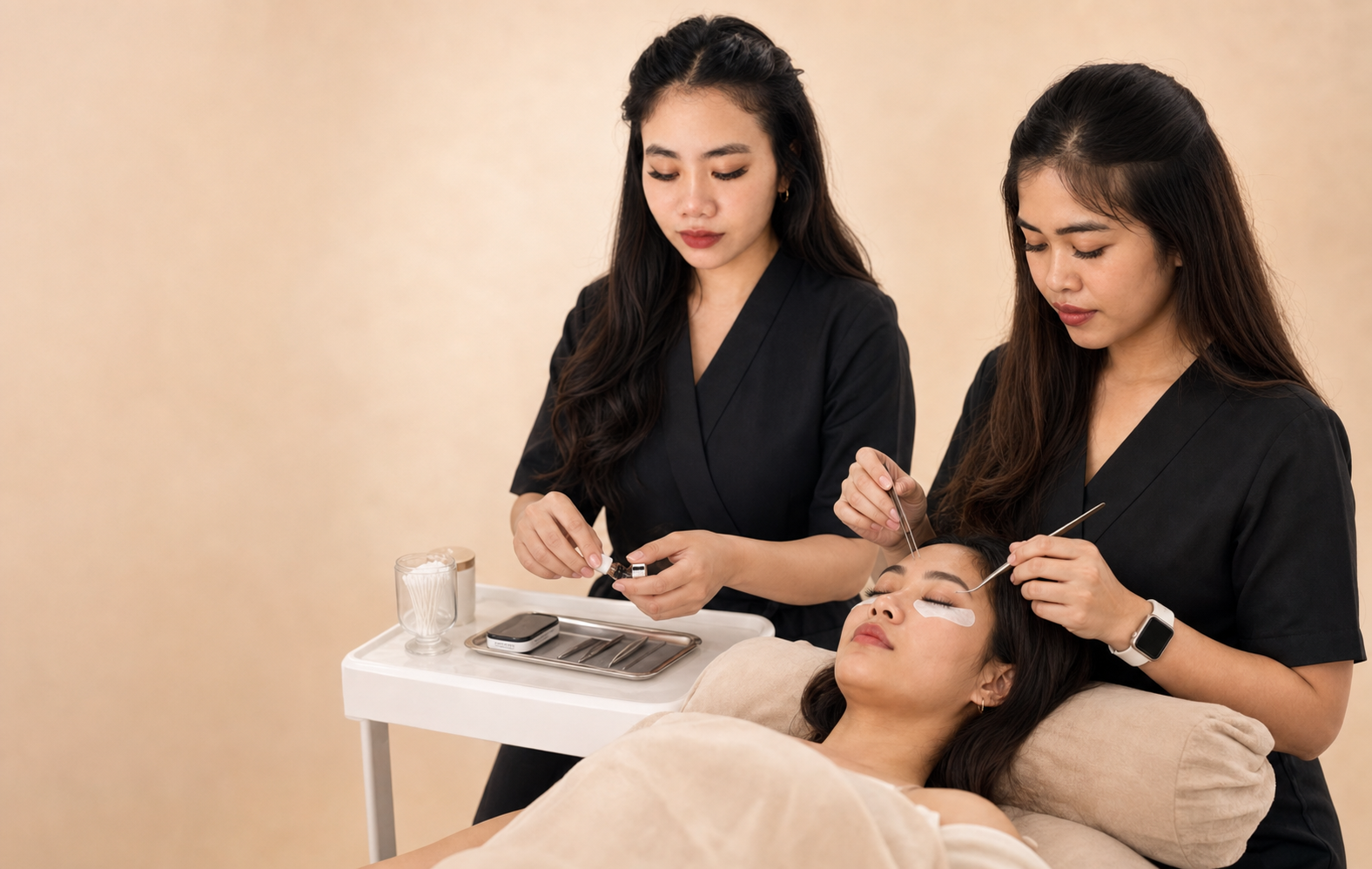
By the time Lash Extensions start growing out unevenly or feeling heavy, it’s tempting to just pull them off in the bathroom mirror or snip the longest ones with nail scissors. It feels like a five-minute fix. In practice, it’s one of the most common ways clients accidentally damage their own natural lashes — and the damage isn’t always obvious until weeks later.
We understand the temptation — extensions can feel uncomfortable once they’ve grown out, and booking a removal appointment takes more effort than reaching for a pair of tweezers at home. But the small amount of time saved rarely outweighs what’s at risk: your natural lashes, which took years to grow the way they did before your first set of extensions.
Each extension is bonded to a single natural lash with adhesive. When you pull on an extension, you’re not just removing that fiber — you’re pulling directly on the natural lash it’s glued to, often before that lash has finished its growth cycle. If the natural lash is still anchored in the follicle, pulling can extract it entirely, sometimes damaging the follicle enough to affect regrowth. Cutting isn’t much safer: scissors close to the lash line risk nicking the eyelid margin, and cutting extensions unevenly can leave natural lashes at different, oddly blunt lengths.
The frustrating part is that the damage from pulling often isn’t visible immediately — lashes can look thinner or patchier only after a few weeks, once the growth cycle would normally have replaced them. By then it’s hard to connect the gap back to a five-minute DIY removal, but it’s one of the most common causes we see.
There’s also a lid-margin risk that’s easy to overlook. The skin along the lash line is thin and sensitive, and repeated tugging or scissors used too close to it can cause irritation or small nicks that heal slowly, especially if it becomes a habit repeated with every set of extensions rather than a one-off.
At the studio, extension removal (IDR 100K, about 1 hour) uses a gentle, adhesive-specific solvent applied to break down the bond, never force. The solvent is left to work for a few minutes, then the extensions are gently wiped away — no tugging on the natural lash underneath. The full hour isn’t because it’s complicated; it’s because doing it slowly and gently is what keeps your natural lashes intact.
Removal isn’t the fast part of lash extensions — it’s the part where patience matters most.
If your extensions are due for removal but your appointment isn’t for a few days, resist the urge to pick at loose ones or use tweezers. A stray extension hanging on by a thread is still better left alone than pulled — it will either fall out naturally or come away cleanly with solvent at your appointment.
It also helps to avoid oil-based makeup removers or heavy moisturizers right before your removal appointment — a small amount of natural buildup doesn’t cause problems, but going in with clean, product-free lashes generally makes the solvent work faster and more evenly across the lash line.
It’s worth saying plainly: professional removal at IDR 100K isn’t expensive relative to what’s at stake. A pair of nail scissors and a few minutes at home might feel free, but the potential cost is weeks or months of thinner natural lashes while they regrow — assuming no lasting damage to the follicle itself. Measured that way, professional removal is the cheaper option, not the more expensive one.
If you’re planning to switch from extensions to a lash lift, or simply want a break, a professional removal is always the first step — never layer a new treatment over extensions that were pulled or cut at home, since any hidden damage to the natural lash won’t have had time to show or heal.
A DIY removal might save an hour today, but the risk is weeks of thinner, patchier natural lashes afterward. A professional removal is quick, affordable, and specifically designed to protect the lashes underneath — which is the whole point of wearing extensions in the first place.
Save this guide for later, then let us take care of the details in Seseh.

Self-care is more than a trend — it’s essential. Here’s why.
Read more →
Nourish your lashes from the root with these lash-loving ingredients.
Read more →
A general guide to Bali’s dry and wetter seasons, crowds and weekday vs weekend timing, and why Seseh and Cemagi stay calm whatever time of year you visit.
Read more →