
The Benefits of Taking Time for Yourself
Self-care is more than a trend — it’s essential. Here’s why.
Read more →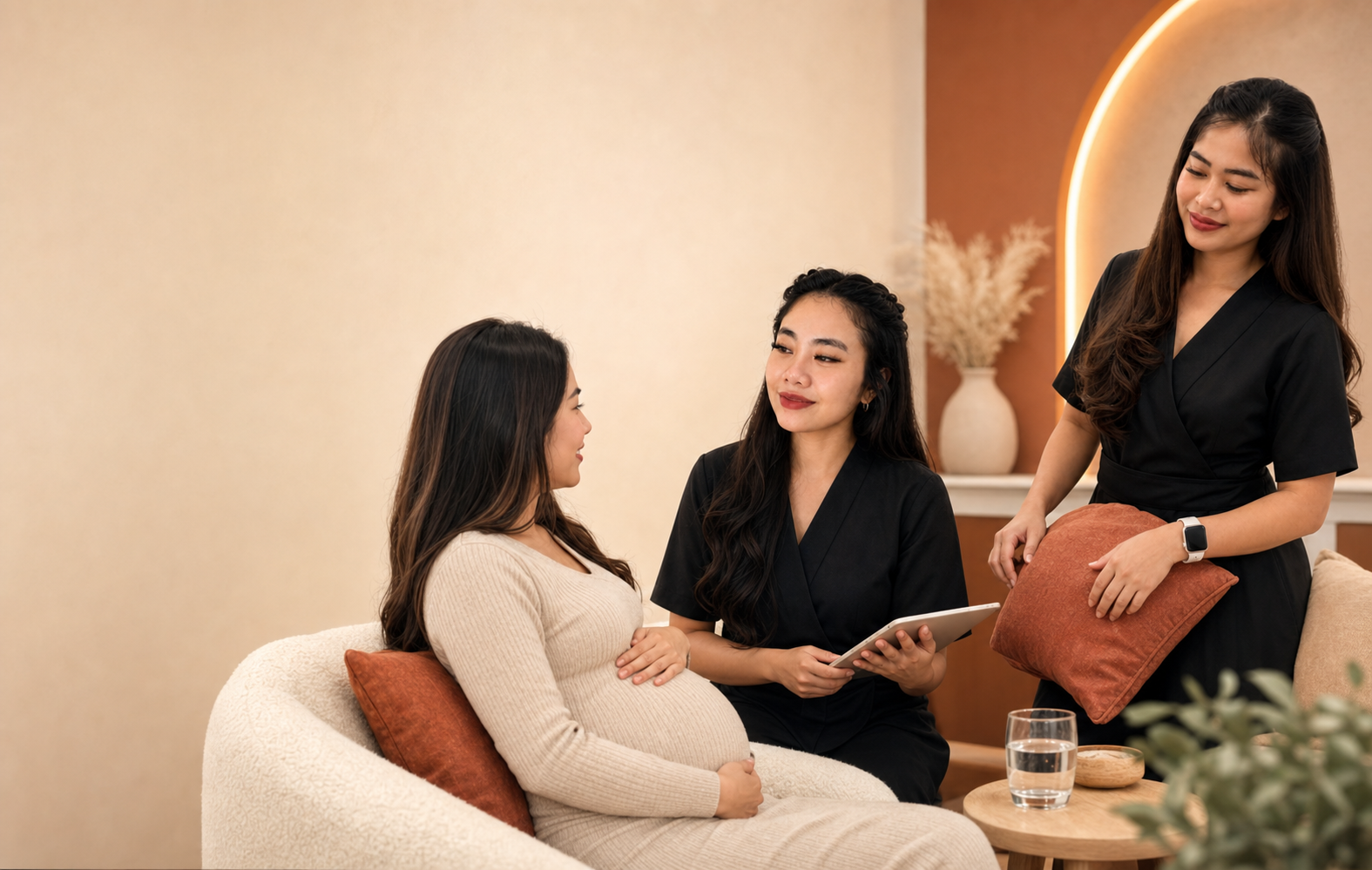
This is one of the questions we get asked most often, and it deserves a careful, honest answer rather than a quick yes or no. We’re not medical professionals, and this article isn’t medical advice — it’s a plain explanation of what a Lash Lift involves, so that you and your doctor or midwife can make the call that’s right for you and your pregnancy.
There’s no shortage of conflicting opinions on beauty treatments during pregnancy online, and lash lifts are no exception. Rather than repeating a blanket "yes it’s fine" or "no, avoid it entirely," we’d rather walk through what actually happens during the appointment so you have real information to bring to the person who knows your pregnancy best.
Before booking any beauty treatment during pregnancy — a lash lift included — the safest first step is a quick conversation with your doctor or midwife. They know your specific pregnancy, any conditions you’re managing, and any sensitivities that have come up. This article can help you ask the right questions, but it can’t replace that conversation.
A lash lift uses a setting solution and a neutralizing solution applied directly to the lashes, with silicone rods shielding the skin and eye area as much as possible. It’s a topical treatment on the lash line rather than something ingested or injected, and exposure time is short — around an hour total. That said, "topical" and "short exposure" are not the same as "risk-free," which is exactly why the conversation with your care provider matters.
Pregnancy can change how skin reacts to products you’ve used before without issue — hormonal shifts sometimes increase sensitivity or reactivity. If you and your doctor decide to go ahead, a patch test 24–48 hours before your full appointment is a standard, sensible precaution, even if you’ve had a lash lift before pregnancy with no problems. It’s a small step that tells us and you a lot before committing to the full treatment.
The right answer here isn’t "yes, always safe" or "no, never" — it’s "tell your therapist, and check with your doctor first."
Always let Dinda or Risma know you’re pregnant when you book, regardless of trimester. This isn’t a formality — it lets us recommend a patch test, adjust timing if you’re not comfortable lying still for the full hour, and take extra care with positioning if lying flat is uncomfortable in later trimesters.
Some clients prefer to wait until after the first trimester simply due to nausea or general sensitivity, rather than any specific risk with the treatment itself. If you have a known allergy to lash lift solutions, or any diagnosed skin condition that’s flared during pregnancy, that’s a conversation to have with your doctor before considering any lash or brow treatment at all.
Comfort is also a practical factor worth planning around. The appointment involves lying still with your eyes closed for around an hour, which can be harder to manage in later trimesters. Letting us know in advance means we can add extra pillows, adjust the reclining angle, or build in a short break partway through if you need to shift position.
We can tell you exactly what products touch the lash line, how long they’re in contact, and how we adapt the appointment for comfort in later trimesters. What we can’t tell you is whether that’s the right choice for your specific pregnancy — that assessment belongs to your doctor or midwife, who has the full picture of your health that we simply don’t have access to.
If you’ve ever had a reaction to lash lift solutions, hair dye, or similar chemical treatments in the past — pregnant or not — that’s a clear reason to avoid the treatment or discuss it with your doctor first, rather than testing it again during pregnancy on the assumption it will go the same way as before.
If you’re unsure and want to ask about your specific situation before booking, message the team directly — we’re happy to talk through what the appointment involves so you can bring accurate information to your doctor or midwife.
Save this guide for later, then let us take care of the details in Seseh.
Self-care is more than a trend — it’s essential. Here’s why.
Read more →
Nourish your lashes from the root with these lash-loving ingredients.
Read more →
A general guide to Bali’s dry and wetter seasons, crowds and weekday vs weekend timing, and why Seseh and Cemagi stay calm whatever time of year you visit.
Read more →